Social Emotional Skills and Learning

I think one of the most important things for a child to learn from an early age are Social and Emotional skills. In a classroom setting and at home a child is constantly experiencing different situations and as they deal with these situations they are passively learning some social and emotional skills. 

We, as adults, caretakers and teachers however can also take a more active role in teaching a child the social and emotional skills. Conscious teaching and commitment to helping and guiding a child in learning how to cope with different emotions will result in a child who is prepared to cope and master a wide range of situations. The role of the adult is to create such an environment where the child feels safe and has trust in freely expressing the different emotions without filter. Then you can gently guide the child(ren) to learn to understand, adjust and express all the different emotions.

So what are social and emotional skills? How do you teach them and why would you need to learn them? 

Some examples of what social and emotional learning can be; 

  • Empathy
  • Social skills
  • Self-Awareness
  • Decisions and choices
  • Conflict resolution
  • Relationship skills
  • Understanding self and others

In the youngest of children it can simply mean understanding the feeling that the child is feeling and as the child gets older, learning to navigate the social situations, understanding the complexity of emotions and showing empathy and willingness to be an active part of a socially functioning group or population. 

From an early age it is important to show a child how to cope with the feelings that they experience. We can set up a safe environment for such learning throughout the entire development arch of a child. Actively teaching social and emotional skills will give a child the necessary tools they need to be able to cope in different situations, be resilient, co-operative, adaptive, morally responsible, respectful and so much more. 

To the end of this post I would love to gather a library of websites and books which are useful in teaching and learning Social and Emotional skills. Share your favourites in comments or on Instagram or Facebook – sharing is caring! 


Scroll down to find the following examples on how to learn social and emotional skills;

  • Worry the Bear and The Calm Down Tent
  • Feelings Dice
  • Emotional Self-Portraits
  • How do you feel today?
  • I like / I don’t like / I like to wear
  • Dodge Cars

Worry the Bear and The Calm Down Tent 

A calming down area or space for your child group, classroom or home.

In my preschool group I have always tried to make sure we have space for the individual needs of each child, including a calming down area. One of the most successful ones was Worry the Bear and The Calm Down Tent – an ikea circus tent with a few pillows and a stuffed bear. 
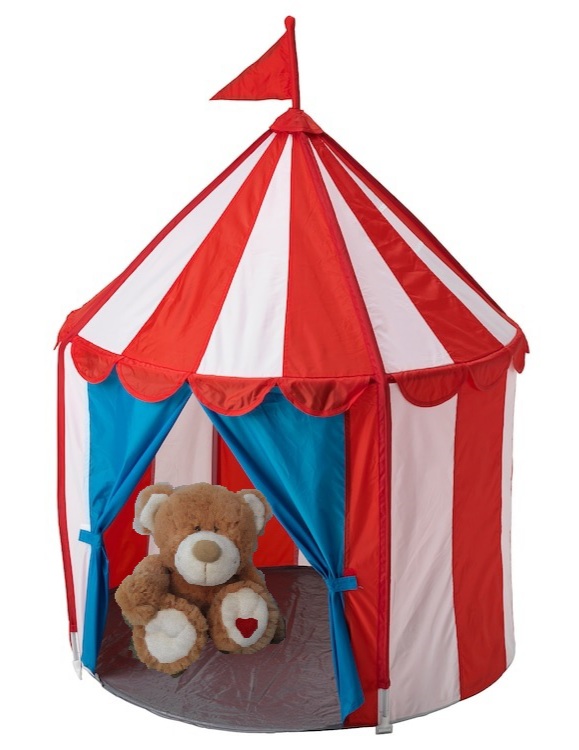
When this calm down area was introduced, we told the children that the tent is for calming down and you can whisper all your worries and things that make you unhappy or sad to the Worry Bear living in the tent. We soon did notice that some children would ask for the opportunity to go into the tent themselves when things got hectic and they needed some quiet time – this is of course optimal concerning self-regulation! For others we had to keep suggesting that perhaps a moment in the tent would be beneficial for them. Some kids wanted to go in the tent, others didn’t care for it much and sometimes things got hectic inside the tent too. At those times we had to remind the children what the tent was for. 

Do note, that the tent should Never be used as a punishment, it is not a naughty step or a time-out space. The purpose of the Calm Down Tent is to provide a safe place for a child to go and take some time for themselves, regulate their feelings and calm down. Cuddling the Worry Bear calms the body and soul.

Throughout the years I have had all kinds of kids in my group, sensitive ones, quiet ones, wild ones, all kinds! And for each of them I have always tried to offer the opportunity and space to calm down. Just as each child is a unique individual, each one has benefited from such a space in a their own way. 

Here some tips for when you introduce a calm down area; 

  • Be thorough in your explanation as to what the area is for
  • Give real-life examples and role play situations when it would be a good idea to go into the calm down area
  • Answer all the questions the children have in the coming days – positive reinforcement is key
  • Make a highlighted effort to guide your group in the use of the calm down area for the first couple of weeks
  • Only by trial and error will you find the best way to use a calm down area in Your group
  • The calm down area is meant to be a positive thing, I repeat – never use it as a punishment. A child should always want to go to the calm down area themselves 

Worry The Bear you can introduce for example at your morning circle time. You can role-play how you tell your worries to the Worry Bear. Perhaps the Worry Bear has a voice? Perhaps they will answer the children’s questions at circle time? The sky’s the limit in the performance you want to put in when introducing Worry The Bear! 

The purpose of this harmless soft toy is to be a safe and gentle tool for a child to reflect upon and to unload their worries. Some of the children will want to tell Worry the Bear everything whilst others will not care for them that much. The children can choose themselves how much they want to interact with Worry the Bear. 

What works for you?

Test and feel how the calm down area works in your group and with the children in your group. You know best. Perhaps it will be beneficial to allow children to bring something with them like a book or their own soft toy or lovey. I also had a soft lamp (from ikea) with mood light that the kids loved touching and looking at in the tent. 

Each child can bring something different that works for them. The point of the calm down area is to help a child calm down, soothe themselves and self-regulate. 


Feelings Dice

Feeling the emotions with the help of a die. 

Show the children the all six emotions and name them. Perhaps some of the children already know which emotions they are? Then cast the die and then repeat the emotion you got! 

Feel the emotion together, what does it feel like? How does it feel on your face? Does your body posture change somehow? Does the emotion become stronger if you display it with your entire body? Discuss when you might feel such an emotion. Guide the children with these questions, but try to hear them more. Let the children be the leaders of the conversation. Then continue taking turns throwing the die, practise showing the emotion and continue discussing the different emotions. 

Take out some mirrors, small ones of big ones, whatever you have available. The children enjoy greatly seeing themselves express these emotions. 

Quick fire round; Sit in a circle and take turns throwing the die. Throw the die, express the emotion as fast as possible and give the die to the next one! This is a bit more action packed and great fun for little ones.

This kind of simple practise does two things, the children learn to label these emotions and it sets the tone in the learning environment you are in. An environment where it is safe to express these emotions with the whole group. This kind of activity tells each child that their emotions are welcomed, they may test their boundaries and that it is ok to feel different feelings and express them. 

When a child feels safe to express their feelings they will start to understand the range of them and learns to process them in a developing way. 


Emotional Self-portraits

Media of choice = Camera – What do you look like when expressing feelings?

Our Emotional Self´portraits! (sorry for the bad quality, I had a bad camera back then)

These emotional self-portraits are fun to do with your group of children. Before this activity and craft, we had already prepared by talking about different emotions, what they are and how they are expressed. We had also practised the above dice game and with mirrors. 

We set up a photo session with my preschool group. I gave them different options for emotions “Do sad!”, “Do Happy!” and so on. Some of the children had their own favourites they wanted to have pictured and others needed a bit more encouraging. Some wanted to look in the mirror first and others wanted to just go silly in front of the camera. I tried to get as wide a range of emotions as possible from which we then chose the best ones. 

I made a pre-selection (framing, blurriness, repetition, range etc.) and then offered each child a few choices to pick from. Their picture was then glued on an A4 piece of card stock and the children got to decorate the edges. For the benefit of the adults looking at the display I also printed the names of the emotions. 

This was a super popular display board for the rest of the school year. We did this towards the end of term 1, Novemberish and it was hung up on the wall until Summer break. I also hung a full-body mirror next to this display as it was so popular amongst the children. They kept on coming back looking at themselves and each other, labeling the different emotions, repeating them themselves and even having full on conversations about the different emotions and the different experiences and stories the children had involving them! 

When you physically hang the feelings on the wall, it signals to the child that this is a safe place for it. 


How do you feel today? 

Examining your emotion in the morning and in the afternoon. 

This display is easy to set up, I had mine hanging right by the entrance as all the children come in in the morning. 

You need; 
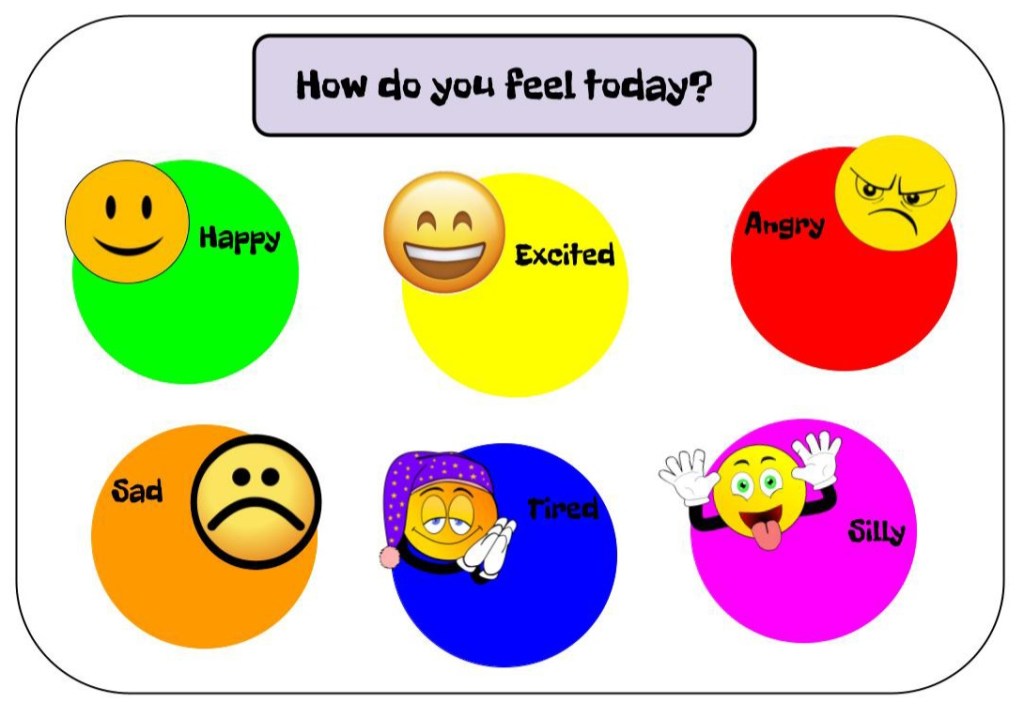
  • Your choice of emotions (my choice is pictured below)
  • Same amount of circles or any other shape in cardboard 
  • Picture card of each child (I laminated mine)
  • Blue-tack

Hang the circles in a visible place with pictures of the emotions (again, the names are in writing mainly for the adults). I had a mini-whiteboard with all the children’s pictures on the side of this where we would place all the pictures before the next day started. 

We showed the display to the children and went through all the emotions with them. We had a chat about what the feeling feels like, when you might feel like it and practised expressing them too. We then kindly asked the parents to help their child to place their picture on their chosen emotion each morning. 

In the afternoon we would revisit the display and ask the children whether they still feel the same and if not, where they should be moved to? If they wanted to move, we would also then examine a bit as to what were the reasons why they changed? What happened in their day that made them change their emotions? Sometimes happy things happened and sometimes sad things happened, but the children still enjoyed greatly the realisation that throughout the day you can indeed have a range of feelings! 

Observations

When we set this up in my classroom, we noticed quickly that we had to reinforce the parents views more than the children. The parents kept trying to convince the children that surely they are happy or excited to come to preschool! But we gently kept on guiding them that the children absolutely do not need to be happy when they arrive, we all have bad mornings sometimes, and perhaps we can do something that will turn that frown upside down. The parents did finally understand that it is ok for their child to arrive just as they are, there’s no need to pretty up anything 😉 Often those parents would then have a happy relief as they arrived for pick up and noticed that their child had moved from sad to silly or from tired to excited. Sometimes it was the other way around and my hope of course is that the children then had a convo with their parents about why the day ended in a sad or tired way. 

This activity was a great conversation starter and kept the discussion about emotions alive all the time. We had good talks about how negative can become positive and the other way around. Most importantly we tried to relay to the children that it is ok to come exactly as you are and then pass some tools to them so that they are empowered in their own day. 

“I like / I don’t like” and “I like to wear”

Picking and choosing things you like and don’t like. 

These are lovely crafts to do with the little ones. We got a pile of magazines and toy catalogues as a donation, so I decided to make this “I like” / “I don’t like” craft. 

You need: 

  • Two pieces of card (I used A5 size one rectangle and one cut into a heart)
  • Pictures from magazines, stickers, newspapers etc. 
  • Fabrics and buttons and/or other things from the haberdashery
  • Glue

We ripped entire pages of the toy catalogues and pre-cut a variety of pictures. Depending on each child’s scissor skills they could pick the pre-cut pieces or cut their own. 

First the children were encouraged to pick pictures that they like. Those were glued onto a heart cut from cardstock. When their heart was full, we asked the children to pick pictures they don’t like and those pictures were glued onto an A5 sized piece of cardstock. I chose on purpose different kinds of pictures from different sources and used the same selection for both the choices. 

Perhaps my group just happened to be more positive as I did notice that the “I like” heart was much more full than the “I don’t like” card. Maybe it is more fun to put on things that you like and you don’t really want to focus on things you don’t like anyways, right! 

When the cards were finished and the glue had dried, each child got to present one thing from each of their cards to present to the rest of the group explaining what they like most and what they like least and why. The children chose that they did not want to display the “I don’t like” cards, so at the end of the day they were shown to parents and they either ended up in the bin or the children took them home. Perhaps they had a good conversation about it at home?

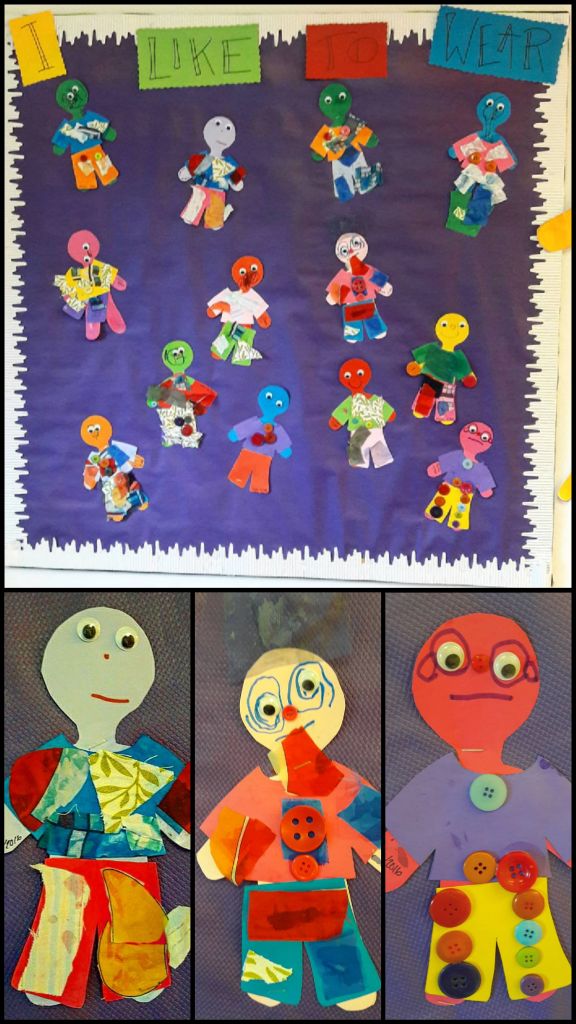
I like to wear:” – craft is very similar to the “I like” craft. Based on the child’s scissor skills they cut their own human shape paper doll or they used a pre-cut one. We had a pile of different fabrics and buttons that we loaded on the big tables and let the children cut and use as they pleased. 

We encouraged the children to choose what they like to wear based on the look and feel of the fabrics; what colours do they like, is there a special fabric feel they like and so on. We assisted the children only when requested in getting the pieces they wanted, for example with getting a certain pattern or size, just to keep encouraging the thinking process and discussion of things they like in these materials. Some of the children took two pieces of fabrics, glued them on and wanted to go play whilst others were carefully choosing colours and shapes and matching things in their own unique way. We even got a few requests at the end of the day if they could add a button here or glue on another piece of colourful fabric. 

We were happy to see how the children were observing the clothes they were wearing that day and were discussing with us and each other whether they liked them or not. Some were very pleased with their colour combinations – some were special indeed – some proudly exclaimed that they had chosen their own clothes today! While others bluntly commented that their mom got angry with them and made them wear “this”. 😀 

The objective for these “like” crafts was to awaken discussion and study what we like and what we do not like and why. This was also a great way to awaken tolerance amongst the children: Everyone likes different things and that’s ok! 

Dodge-Cars

The more polite version of Bumper Cars 😉

A child under the age of 4 has not always quite realised that the world does not revolve alone around them. Here is a great exercise for a gym lesson, it practises the child’s self-awareness, personal space and being mindful and tolerant towards others. 

We know Bumper Cars from the amusement parks, right? This is the opposite version of it: instead of bumping into others, you need to Dodge! 

This is how: 

Define an area – we had a large gym in use, so I used benches and cones to mark the area. 

Define the “Parking lot”, for example a bench. 

Take as many hula-hoops as you have children in the group. 

When you have set up the area, place the hula-hoops on the floor inside the area, apart from each other. Ask the children to go and stand inside one. Before touching the hoops, give the children instructions: 

  • The hula-hoop is your “car” – it is Your personal space
  • The aim of the game is to Dodge others, avoid touching anyone and all times
  • You may drive around the space freely, but make sure you do not run into or touch others 
  • Even if by accident you touch another “car”, you have to go to the parking lot to count to ten and then return back to driving around
Notes: 
  • Define a large enough area where the children can easily avoid and dodge each other or send just a small group driving at a time
  • For some children it is difficult to process that even for an accident you have to go to the parking lot, which is why it is important that you relay to them clearly that the parking lot is not a punishment, it is a reset for your thoughts to make sure that you focus on dodging

If it works for your group, put on some music – driving is always more fun with good background music! 

If the game goes well and dodging starts becoming too easy, you can up the difficulty level by making the driving area smaller. 

How to be a good Friend?

Every year I make a ‘Friendship Promise‘ with my preschool class. We talk about how to be a good friend, how to respect yourself and others, including everyone and the importance of sharing.

In Finland we celebrate Valentine’s Day as a Friends day, rather than a lover’s day. So this is a great time for a good talk about friendship at home and in class. In my preschool class I would always do this at the beginning of the school year. We had it hanging for the whole school year and that way it was nice to regularly revisit how we have all committed to a common goal of friendship, good atmosphere in the class, respecting each other and doing our best to be good friends to each other.

Friendship Tree

Here we first did some Process art on A4 sized papers. I then helped the children trace their handprint and then cut it (older children can do this themselves).

Friendship Puzzle

I found this template on twinkl.co.uk but it shouldn’t be too hard to make yourself either. I gave each student a piece and asked them to draw “A Good Friend” on it.

Friendship Heart

This is the most simple craft, making a Friendship promise – press everyone’s handprints on a heart and write a little poem around it.

Friendship Fish

Marcus Pfisters “Rainbow Fish” is a lovely story about friendship and sharing. After hearing the story we decided to make our own rainbow fish where on the scales we wrote advise for how to be a good friend.

Friendship Quilt

I helped all my students press their handprints on different coloured cards, with finger paints. The we sewed the pieces together, weaving a friendship quilt. Older kids can of course sew the pieces together themselves, maybe make holes around the edge with a hole punch.

Valentine’s Crafts

Valentine’s Butterfly

You need:

  • Roll of paper 
  • Card stock f.ex. A4
  • Decorations like stickers, diamonds, glitter etc.
  • Glue 
  • Paint
  • Eyes

You can either use coloured card stock to make a roll of paper or you can paint a toilet paper roll. Make a face on the roll either by drawing or using materials you have at home like googly eyes. 

Fold an A4 piece of cardstock from the middle and cut it into a heart, so that the two halves of the hearts meet in the middle. Open the cardstock for ‘wings’, glue the paper roll to the middle of the wings and decorate to your liking! 


A Lovely Ladybird

This can also be great scissor practise and fine motor practise for your child. 

You need: 

  • Card stock, black and red (or your own choice)
  • Two paper fasteners
  • Decorations of your choice (I used stickers to practise fine motor skills too)

Trace both of your child’s hands on the red card stock and cut them loose. Children often love tracing their own handprints so do take some spare paper too so that you can make extra ones 😉 Depending on your child’s age, let them practise their scissor skills and explore their hand prints independently.

Cut a body for the ladybird from black card stock. You can easily make the body by tracing two round objects you have easily available. The bigger one, like a tape roll should be approximately the size of your child’s hand, then it fits nicely when you attach the wings. 

Decorate the body and the wings to your liking! 

Paper fasteners can be very sharp so be careful when attaching them. Punch a hole to the top of each wing and to the corresponding place on the body, for example with a large needle, then push the paper fastener through. Now you have moving wings! 


Heart Hat from a Paper Plate 

This is a fun hat for a dress up party or just for the fun of it! 

You need:

  • A Large Paper Plate
  • Scissor
  • Decorations of your choice, f.ex. Paint, diamonds, pom poms, whatever you have available

Fold the paper plate in half and cut the middle into a heart as pictured. Then decorate to your liking! 


Marbling with Shaving Foam and Paints

You need: 

  • Shaving Foam
  • Poster Paints
  • Paper
  • Two trays
  • Sticks, f.ex. Bbq stick or lolly stick
  • A long ruler or other flat stick

Cover the first tray with shaving foam equivalent to the size of your paper. Drop small blobs of paint around the shaving foam and swirl it in with the sticks. When you’re satisfied with the colours, then gently press a paper to the foam. Press firmly so that each part touches the shaving foam, but not too hard so that the foam won’t spill all over. 

Place the paper to the other tray and wipe the excess shaving foam off with the ruler. 

Let the paper dry. 

Once dry, cut some shapes like hearts from your marbled paper and use it for your Valentine’s cards!

Autumn – Crafts and Activities

Autumn is here!! It’s my favourite time of the year! The weather gets colder and more fresh. You feel guilt-free staying at home with a book enjoying a hot cup of chocolate. Nature starts its transformation. In Finland Autumn is in full swing, the colours are absolutely stunning, we call it ‘Ruska’. 

A walk in fresh air is always a great thing to do, but especially in Autumn the things you can find whilst out are extra exciting. Take your child or your class or just yourself out on a walk and collect interesting things you can find. 

Here’s a few things I find useful to collect. See further details for activities below. 

  • Leaves – great for colour recognition, crafts, and rubbings
  • Pine cones – great for painting with and making animals with
  • Sticks – great for crafts and building
  • Flowers – if you can still find some, dry and use for crafts

All of the above can also be used for colour recognition and sorting, counting, building 2D and 3D creations and shape making and recognition. Imagination is the limit, you can really use the natural materials for a whole lot of things!

Drying the leaves

It’s good to make sure that your leaves are dry before you start using them in crafts of activities. The easiest way to do so is to place your leaves in between a newspaper, place something heavy on top (like a book) and leave them overnight. Make sure you place your leaves on the newspaper in such a manner that they do not touch each other. I prefer to use newspaper as the paper quality is much more porous and therefore sucks up the moisture from the leaves well. 

Some leaves are better to keep than others. Thicker and waxy leaves are good to keep for a longer period of time. You also want to collect leaves that have recently fallen, because as they start to decompose, they become increasingly brittle.

Colour naming and sorting

Look at the world around you and admire the colours you can see. Encourage your child to name the different colours and even see if you can ask them to get a leaf of a particular colour you suggest. If your child is older and knows their colours well, why not name them in a different language you or they might be learning.  

To make the sorting easier, you can use coloured pieces of paper or as pictured papers with the colour names. Three levels of difficulty:

  1. Coloured papers – for early years coloured papers are good
  2. Names of colours written in their respective colours – those children or students learning the beginning sounds or reading; the names of the colours make it more interesting but the colours are there to make it easier
  3. Names of colours written in black – more challenging reading activity for those more advanced in their reading skills

Make images with natural materials

Nature has made so many interesting shapes and forms that are just fantastic for picture making. You can make 2D images or build 3D images – just your imagination is the limit! 

You can just keep your materials in baskets and create images with them. Or if you’d like to keep the images, just take a piece of paper and glue the pieces on. I recommend liquid glue and a brush or small spatula (or a piece of cardboard) to spread the glue with as the materials can be a bit delicate. 

Here are a few examples of what I came up with. Why not build a story around the images too. “There once was a girl with flaming red hair…”

Counting activities

I love counting things and regularly did it with my class. I often ask them to “Go and collect 10 leaves” or “Can you find three yellow leaves?” or “How many leaves can you keep on your head?”. Then we count them together or just count to three and toss them up in the air to enjoy the Autumn rain! 

You can use number cards and/or amount cards to count and sort your natural materials. This is great for counting, number recognition, naming and just good ol’ fun 🙂

Autumn Colours Painting Project

Big piece of paper on the table, poster paints in Autumn colours and a bunch of different kinds of tools to splash and splosh the paint with! 

Aprons highly recommended! 😉 

Sit back, relax and enjoy the joy on the kids faces as they explore the tools and make their marks. It’s sensory, colour recognition, team work and just a whole lot of fun! 

Once the painting is dry, cut it up to smaller pieces and have the kids cut some leaves out of it. We’ve made wreaths and trees out of them. 

Make Pine Cone Animals

All children in Finland know the “Käpylehmä” or the “Pine Cone Cow”. All you need is a pine cone and sticks. They are everywhere this time of the year. Just head out on a lovely fresh Autumn walk and collect different sized pine cones and sticks. 

Cut the sticks to a suitable size and attach to the pine cone – there you go, your first farm animal 😉

You can also paint the pine cones and/or add glitter for a Disco-cow 😉 

Top tip: 

If your pine cones are closed, just keep them in a warm, dry place for overnight and they will open up again nicely. 


Science of the Leaves

Why do the leaves change colour in the Autumn? What happens? 

Here’s a fun little activity to do to look into the science and understanding of what happens in those beautiful Autumn leaves: 

You need: 

  • White paper 
  • Plastic pocket / file folder of the same size as the paper (I used A4)
  • Permanent markers
  • White board markers
  • Something to wipe with; paper / microfiber cloth / sponge

Prepare:

A white paper (I used A4 size) where you draw leaves that you colour in yellow, orange and red colours (I recommend using red the least as that will be seen through more easily, see below). Then take a plastic pocket where you put the paper with the leaves drawn on it. Draw the outline of the leaves on the paper with black permanent marker on the plastic. Then colour the leaves with green white board marker (the darker the better). Note that the permanent marker will become loose with the ink from the whiteboard marker, so be careful when colouring with green 😉

With your child or child group: 

Go for a walk and collect some leaves and admire the different colours on them. Perhaps you can see some that have many colours, or maybe the veins of the leaves are a different colour? Explain to the children that the green of the leaves is called chlorophyll, and it is food for the leaves. As long as the leaves are green, the leaves are getting plenty of chlorophyll = food! When the colours on the leaves start changing, you know that the tree can no longer produce food for the leaves and therefore the leaves change colour and fall. The tree is preparing for a good winter nap! 

When you’re back from your walk, give the children the pre-prepared paper+plastic with leaves and something to wipe with. Ask the children to “eat” the green with the cloth. Nom nom nom! Finally you can see the colours remaining when you have wiped away / eaten the green. The yellows, oranges and reds were there all along! 😉

Have fun! 

Spring – Easter

Plastic Egg Decorations

Chocolate eggs are an integral part of modern Easter, here are some ideas how to utilize those plastic eggs we find on the inside of them.

I put all my decorations on a stick, so that I can place them into plants and flowers for a bit of fun!

This is what you need:

  • Candle or other fire
  • Bamboo/bbq stick
  • Knitting needle or other large needle

Heat the needle on the fire for a few seconds and then push it against the plastic. You have to repeat this a few times as the plastic may be thick. Once you get the hole done, add some liquid glue to the hole area and push a bamboo stick through it.

Fun Characters

I made a minion, bee, butterly and birdie, but you can make all kinds of fun creatures and characters out of these. Use the materials you have available at home. Even the youngest ones will greatly enjoy spinning yarn (minion) or scrunching silk paper (flowers) as they do not need to be very detailed.

Minion

  • Plastic egg
  • Liquid glue
  • Blue yarn
  • Black tape
  • Eye

Cut a circle from the tape and stick it on the bottom part for feet. Spread liquid glue on the area where you want the minion’s dungarees to be. Spin yarn around the glued part. Cut small pieces of yarn for suspenders. I made the eye from silver and white paper and black tape. Cut a suitable sized strip of black tape for the goggle strap and glue on the eye.

Bumble bee

  • Plastic egg
  • Liquid glue
  • White paper
  • Black tape
  • Eyes

Cut suitable sized strips of the black tape for stripes and attach. Make eyes and wings out of white paper and glue them on with liquid glue.

Butterfly

  • Plastic egg
  • Liquid glue
  • Colourful papers
  • Decorations of your choosing
  • Eyes

Fold a coloured paper in half and draw half of a butterfly wing, then cut and open. Decorate the wings however you want, you can use glitter, stickers, paints, markers, anything you have available at home. Glue on the wings and eyes to the plastic egg with liquid glue.

Birdie

  • Plastic egg
  • Liquid glue
  • Old knitted socks
  • Yellow and orange card
  • Eyes

Cut a beak, feet and wings from card. Cut same shaped wings from the knitted socks as well and glue them onto the card. Treat the edges of the knitted pieces with water-liquid mixture (50/50). Glue all the parts onto the plastic egg with liquid glue.

Flowers with grass

In Finland we have a tradition to grow grass for Easter, we can find small bags of grass seeds in all supermarkets. They are fun for crafts and to make a setting for your Easter displays. Here’s an example of flowers with grass centers:

  • Plastic egg
  • Liquid glue
  • Tape
  • Soil
  • Grass seeds – alternatively you could use cress

First make a hole to the bottom of the plastic egg and insert the bamboo stick, as instructed above.

Flower 1: cut petals of your choosing from silk paper. First glue the petals on the plastic egg with liquid glue and then secure and beautify with tape (any colour you wish).

Flower 2: cut two approx. 7 cm wide pieces of different coloured silk paper. Fold the paper to a tube and round one end. Scrunch up the silk paper gently, so it is easier to wrap around the plastic egg. Add liquid glue and wrap the silk paper freely around the plastic egg. This is an easy version for the littlest ones to do, as the placement of silk paper does not require much detail.

Fill the plastic egg with soil and add seeds. Cover with a thin layer of soil and water gently with a pipette or spoon. Wait until your grass/cress starts growing.

You can cut off the top of the plastic egg or leave it in place. Closing the lid will make a nice suprise for the person you gift this flower to!


Paper plate Birdie

This is an easy craft but requires a drying period. 

You need: 
  • A paper plate
  • Paints (or whichever alternative you have available to decorate the plate with)
  • Eyes
  • Cardboard for beak
  • Glue 
  • Feathers (instructions below)

Start by painting the matte side of the paper plate and let it dry. For painting you can use brushes, sponges or fingers – whichever style suits you best today! 

When the paint has dried, fold the plate in half and glue (or staple or tape) the bottom part to close it. Cut a beak and glue it on along with the eyes. Then decorate with feathers for additional 3D effect. Make a hole to the top of the bird and hang it with string somewhere to bring Springtime joy! 

Shape chicken

This may seem like a simple craft, but it combines quite a few skills. It requires knowledge of the placement of things, spatial planning, fine motor skills and scissor skills. 

You need: 
  • White paper
  • Colourful card for beak
  • Eyes
  • Red paint (preferably finger paint)
  • Something to use as a template for circles
  • Marker

Start by showing your child how to trace a circle on a paper using for example a roll of tape as a template. Use a whole paper to practise this, it’s great for pencil work, spatial planning and tracing.  Cut a beak and glue that and the eyes to place. 

Then ask your child to lift three fingers up (bit of counting), and put some paint to the top part. Stamp a comb on the chickens’ head. Put some paint on their thumb to make the wattle.

When the paint has dried, ask your child to cut around the head, paying attention to the comb and wattle. Finally you can glue it onto a nice coloured paper if you want. 

I often put the finger paint on a sponge as it is easy for 3-4 year olds to control their paint usage that way. Stamping your fingers on the sponge gives just the right amount of paint without spilling it all over the place.

Peek-a-Boo Bird in Egg

Here’s a classic Easter craft with a brass fastener replaced with a straw.

You need:

  • White card for Egg
  • Card for bird, eyes and beak
  • Water colours
  • Crayons
  • Straw
  • Hole punch

Start by making a big egg on the white card. Decorate as you please, first with crayons and then with water colours. It is fun to see how the crayon ‘stops’ the watercolour from spreading.

For full effect, when you have finished decorations with crayons, make the whole egg wet brushing over it with water. Then start using the watercolours and see how the tension from the crayon makes the paint slide around it.

Make your bird, cut it into a size that fits inside the egg easily. You can use googly eyes or stickers and add feathers (for example the ones described below).

When your work is dry, cut it in half like a cracked egg. Glue on your birdie and put on a fastener to the edge of the egg so that it can open and close.

Alternative Fastener – adults only:

Take a straw and melt one end of it to create a small edge. You can do this with a candle, a lighter or push it gently against an iron or hair straightener. Be very careful!

Then cut approximately an 3 cm piece from the melted end of the straw and then cut it in half just below the melted edge. Make a hole with the hole punch on the egg and push the split end through the hole. Pull the split end apart and use glue if necessary (if the egg will be in a lot of use). I noticed that the glue might not be necessary as the straw stays bent in split position quite well on its own.

Alternative: a Bunny Craft:

With this same technique why not make a Spring Bunny? Cut a bunny shape, first make patterns with crayons and then paint over it with watercolours. When dry, glue on a pom pom or cotton ball for a bushy tail!

DIY Feathers / Scissor Practise

If you don’t happen to have feathers available at home, yet you feel like you’d like to make some Easter crafts – here you have two ideas how to make the feathers yourself!

Scissor Practise Feather:

This is great fine motor and scissor practise for the little ones as the stick in the middle of the paper stops the scissor from cutting through.

You need:

  • Scissor
  • Paper (Thin is better; gift wrap, old gift bags, silk paper, whatever you have available)
  • BBQ stick / Cotton swab / Pipe cleaner / anything else straight but thin

Cut a suitable piece of paper and fold it in half. Place the stick into the fold. Attach with a piece of tape if you give it to your practising 3-4 year old. Then cut the paper into strips in an angle (just like a feather).

When you’ve made enough fringe, remove the stick and cut the feather into shape.

Ta dah!

Feather with a Plastic Bag Fastener

You need:

  • Scissor
  • Plastic bag fastener, those small metallic strips
  • Paper (Thin is better; gift wrap, old gift bags, silk paper, whatever you have available)
  • Glue or Tape

Cut a suitable piece of paper and cut it into a feather shape. This one you can stylise a bit more than the one above. Glue or tape the bag fastener to the middle. Tape works very well and is faster (don’t have to wait for that glue to dry 😉 ). Cut a fringe along the edge, the metallic strip in the middle will stop the scissor from going through so you can just chop chop chop.

When finished, you can use the feathers for any kind of decoration!

The Very Hungry Caterpillar Paper Mache interactive toy

My dear colleague some years ago suggested that we should make something interactive about the caterpillar. The result of that idea was this lovely paper mache caterpillar that can be played with and fed as we read the story. 

You need: 

  • A “sausage” balloon 
  • Newspaper 
  • Glue
  • Paints ; greens, yellow, red, black, purple
  • Pipe cleaners 
  • Hot glue

Use your favourite paper mache technique. There’s one you can do with a blender, some you soak for overnight etc. For this one I simply mixed glue and water and dipped newspaper strips into it. It helps to make the form and attaches around the balloon nicely. Cover the balloon in paper mache but leave a hole for the mouth. After the paper had dried (this one took about 24hrs) I cut the mouth opening a bit bigger and tidier and then painted the whole thing. I decided to stay faithful to the original Eric Carle design with painting so I used similar colours and mixing as in the book. Once the paint was dry I attached the pipe cleaner feet and antennas with hot glue, they’ve stayed in place for at least 5 years, so I can only highly recommend hot glue 😉 )

Finally I printed all the food items from the story, cut and laminated them so that they can be fed to The Very Hungry Caterpillar.

Valentine’s Sun Catcher

This craft requires quite a bit of preparation from the adult, but with the striking final product, it’s well worth the work. 

You need: 

  • A4 card
  • Sticky backed plastic
  • Silk paper
  • Coloured cellophane
  • Scissor 

Cut a heart shaped hole in the middle of the A4 card. Then attach a same sized piece of sticky backed plastic to it. Place all the materials on the table and ask the children to create a pattern of their choosing. 

We gave the kids coloured cellophane, which we had already cut up into pieces. We also gave them sheets of silk paper and asked them to rip smaller pieces from it to make their patterns. This is great practise for fine motor skills and pattern making. When the kids were finished with their artwork, I cut the hearts into shape, leaving a small edge of the card. 

It was quite time consuming to prepare this craft, mainly because of the sticky backed plastic. It is however so cute that it is well worth the effort. 

Cleaning tip for the cellophane: The cellophane has a tendency to gather static electricity and it then sticks to everything and everyone. To easily clean it up, just moisten a piece of kitchen roll. The damp kills the static charge and you regain some control 😉

Now just waiting for the sun to come out… 

Bonus: 

We had the middle heart from this craft leftover, so we decided to paint them and decorate the classroom with them. We gave the kids cotton swabs and a selection of paints.

What I like about using cotton swabs as an alternative painting tool is that it’s small and you can both paint and scrape with it. Even on a small piece of paper you can create beautiful colour patterns and when there is enough paint layered on the paper, you can scrape even more patterns on it.

Hearts Counting

Prepare:

  • Five hearts of card
  • Make numbers 1-5 on them
  • On the opposite side make equal amount of circles for example in a dice pattern
  • Heart manipulatives – mine are soft stickers

This was a good activity to do on the carpet, I always place a piece of large cardboard down as a ‘table’, this gives a good limit and boundary for the children to be mindful of. I had 11 of our, mostly 4 year old, kids around our ‘table’.

We started this activity by counting to five and placing down all the heart cards. We looked at the numbers and named them all and then turned the cards around and counted the dots. I had the hearts in a bowl and gave them to the first kid to my right asking them to take one and pass it on to the next one (this is good practise for taking turns) I then asked the kids to place the heart on a dot. The goal was to ‘fill the hearts’.

The first round went ok, but as we did it again the kids really started paying attention to when the hearts are full and where they actually want to place their hearts. On the third time around as the kids were ever so confident of their skills we decided to do the “harder side” and flipped the cards so that we had the number side up! It took a bit more thinking and counting to do this round as there were no dots to put the hearts on, just the numbers. The kids did such a great job! Especially on a day where everyone seemed to have ants in their pants and there was a whole lot of restless jumping around 😀

The Very Hungry Caterpillar Snack

On the Friday of our week of the Very Hungry Caterpillar 50 years anniversary celebration, we asked all families to bring a snack item from the story to share. I prepared a letter with all the food items asking all families to bring at least one. As we see the parents every day we were able to talk with them to plan and managed to cover almost all of the food items and had a fantastic snack! Many of our fussy eaters tried lots of new fruits without even remembering to not like them 😀 The kids enjoyed seeing the story come to life so much it was just amazing!